
Bamboo education
Running vs. clumping: the difference that decides everything
Every bamboo question a homeowner has (will it spread, will it damage anything, can I keep it, do I need it removed) comes down to a single fact about the plant: what its rhizomes do underground. Rhizomes are the horizontal stems bamboo grows below the surface, and they come in two forms.
Two root systems, two completely different plants
Clumping (pachymorph rhizomes)
Running (leptomorph rhizomes)
Clumping bamboo stays put
Clumping (pachymorph) rhizomes are short and U-shaped: each one turns upward and becomes a new cane right next to the last one. The American Bamboo Society puts the spread of clumping species at one to several inches a season, sometimes up to a foot in ideal conditions, but the clump only widens gradually, like a slowly growing shrub. Planted with a little room, a clumper is a well-behaved evergreen screen.
Running bamboo covers ground
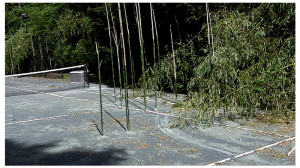
Running (leptomorph) rhizomes grow horizontally through the top foot of soil and keep going, a few inches in poor conditions, many feet per season in the loose, rich, moist soil most Northeast yards provide. New canes surface along the whole length of the runner, which is why running bamboo appears in the middle of a lawn, inside a flower bed, or on the neighbor's side of the fence, far from the original planting. In peak season the new canes themselves can add three to five feet of height in a day.
How to tell which one you have
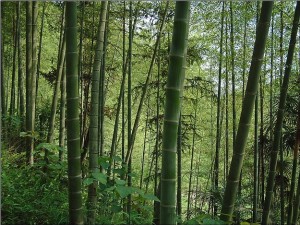
In the Northeast, assume running until proven otherwise. Nearly all the cold-hardy bamboo planted here (golden bamboo, black bamboo, and the rest of the Phyllostachys species) is running. Clumping genera like Fargesia are the exception. Two quick field checks: canes rising in a line or scattered away from the main plant mean runners; and a visible groove (sulcus) along the cane usually marks Phyllostachys, the classic runner.
What each one means for you
A clumper, or a runner that is properly contained and maintained, can be a safe, beautiful planting. We explain how in Can bamboo be safe?An uncontained runner is a different animal: it does not stop on its own, and New York, New Jersey, and Connecticut homeowners can be held responsible when it crosses a property line. If runners are already surfacing where they shouldn't, the fix is complete rhizome removal.
Not sure which bamboo you have?
Send us a photo or book a free consultation and we'll identify it and tell you honestly whether it needs containment, removal, or nothing at all.