
Bamboo education
How to choose a bamboo removal company
Finding bamboo on your property is alarming, especially when shoots appear far from the original planting, cross a property line, or come up near a patio, pool, or foundation. The problem is manageable, but only when the work is properly diagnosed, clearly scoped, and done by someone who understands how bamboo grows below ground. This guide, adapted from our printed Consumer's Guide, is how we'd tell a friend to shop, even if they never call us.
The principle that decides everything
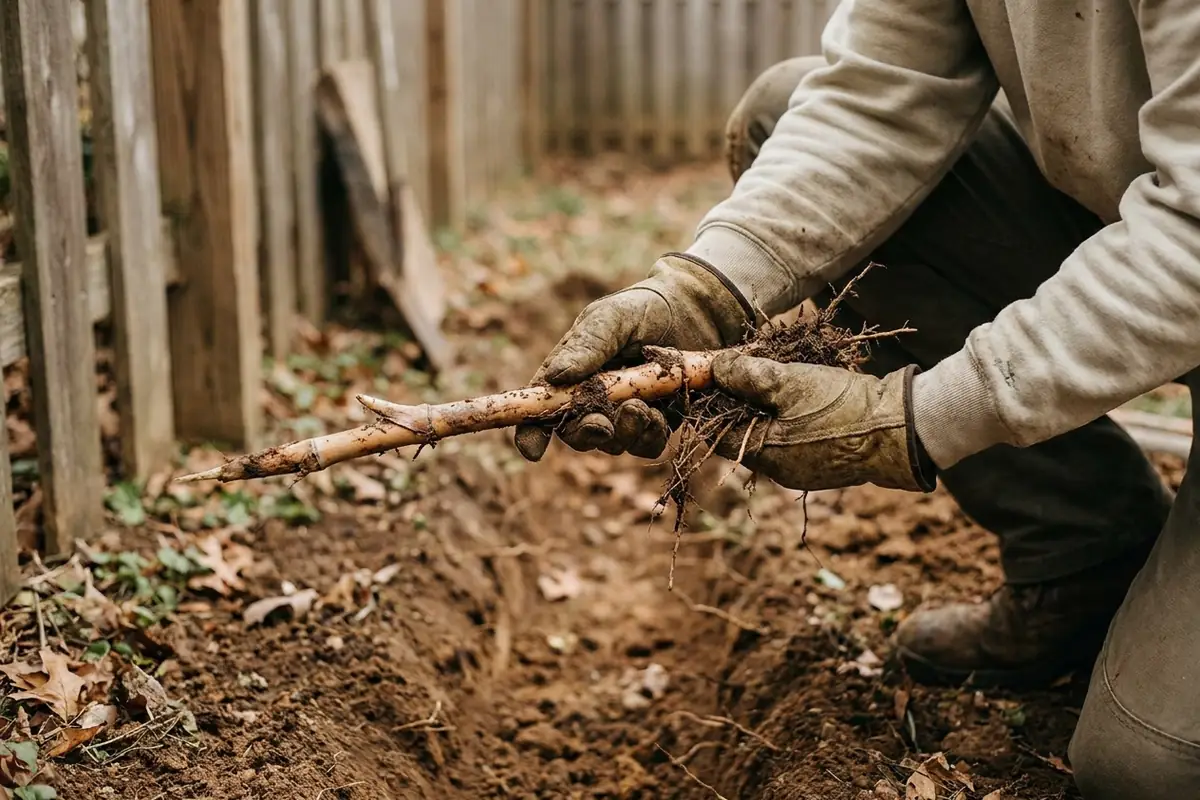
Bamboo removal is not cane cutting. The visible canes are the small, above-ground part of a much larger underground system of rhizomes, and a credible contractor must address both.
The iceberg principle
Before you call anyone
Six things not to do
Don't mistake cane cutting for removal
Cutting canes improves the view. The rhizome system underneath stays alive and keeps producing new growth.
Don't disturb the site before the spread is mapped
Uncoordinated digging, trenching, or grading fragments the rhizomes and hides their direction of travel, which makes the real job harder.
Don't pick the lowest price on its own
The cheapest proposal is often the one that quietly excludes rhizome removal, disposal, restoration, follow-up, or a meaningful warranty.
Don't accept a scope that just says "remove bamboo"
The proposal should define the work boundary, the excavation method and depth, debris handling, protected features, and who owns regrowth.
Don't let rhizome debris be spread as mulch
Rhizome pieces with viable buds can resprout wherever they land. The proposal should state how underground material is collected and disposed of.
Don't assume a barrier ends maintenance
A barrier redirects rhizomes; it has to be correctly built, securely seamed, and inspected so nothing escapes over the top.
Site prep
Get ready before the inspections
Photograph the bamboo from several directions, including shoots away from the main stand. Mark the approximate property line and note whether bamboo exists next door. List what's near the work: fences, sheds, patios, pools, septic, irrigation, utilities, mature trees. Note tight or soft access. And ask your town whether bamboo ordinances or disposal rules apply; several Northeast municipalities have them.
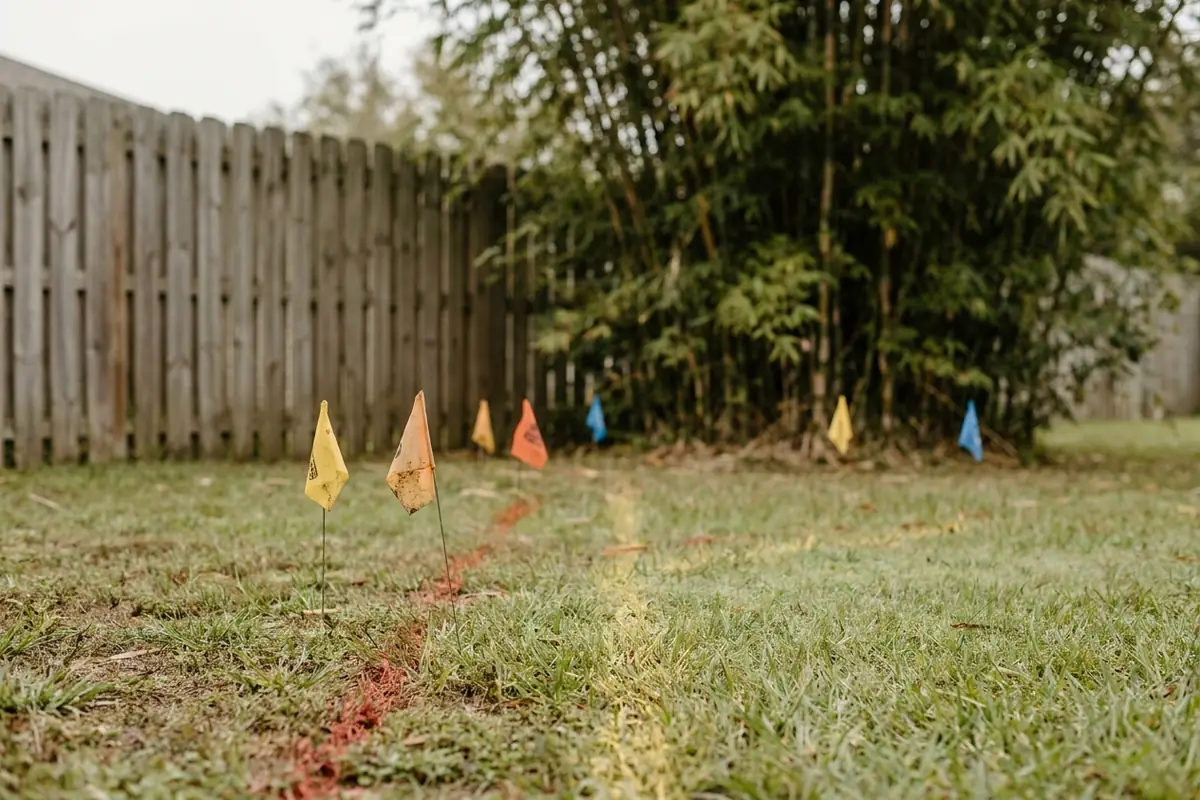
One item is not optional: 811 utility marking. Any excavation plan must account for underground utilities, and private lines (irrigation, propane, septic, pool) need a separate private locator. The contract should state who is responsible for each step.
The interview
Twelve questions that qualify a contractor
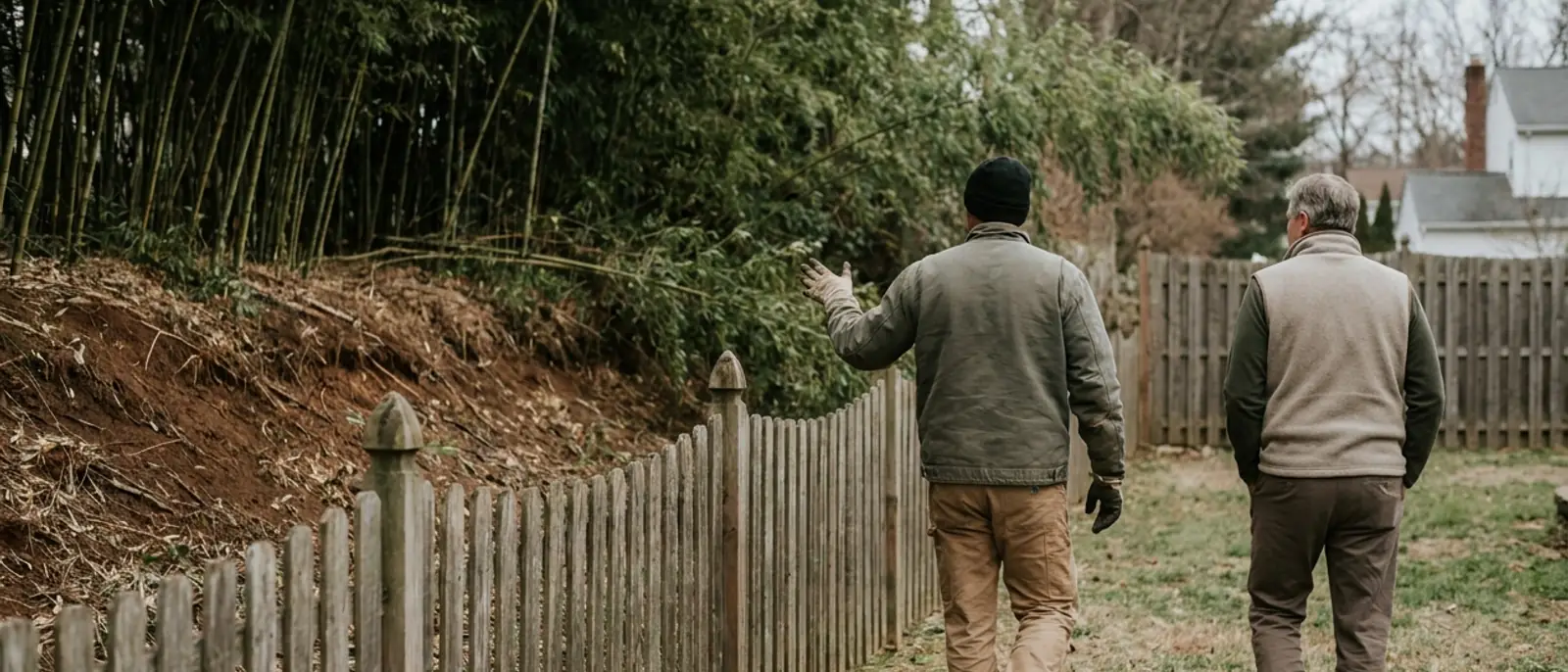
Ask these during the site visit. Direct, specific answers are worth more than sales language.
- 01How much direct bamboo removal experience do you have, on removal projects specifically, not general landscaping?
- 02Will the person who estimates the job supervise or brief the crew doing it?
- 03Are you insured, and licensed where required? Ask for a current certificate of insurance.
- 04Who arranges the 811 utility markout, and any private locating for irrigation, septic, or pool lines?
- 05How will you determine the full extent of the rhizomes before quoting?
- 06What exactly is included: culms, stumps, rhizomes, contaminated soil, hardscape in the way?
- 07How is viable rhizome debris handled and disposed of, and is disposal in the price?
- 08What equipment will you use here, and why is it right for this site?
- 09What will be protected, what gets disturbed, and who pays for restoration?
- 10Is containment actually necessary, and what happens to bamboo already inside the line?
- 11What does the guarantee cover: duration, labor, response time, exclusions, reinvasion?
- 12Can I speak to references from projects at least one growing season old?
The paperwork
Compare proposals line by line, not by the bottom number
A low number is not a bargain when it describes less work. Put the written scopes side by side and check that each one states, or clearly excludes: the exact work boundary and measured area; whether the bamboo is running or clumping; rhizome excavation method and depth; hardscape and access work; utility-locating responsibility; debris loading, carting, and disposal; soil replacement and restoration; barrier material, thickness in mils, depth, seams, and visible reveal; how neighbor-side reinvasion is handled; the number of follow-up inspections; the written warranty and its exclusions; and the payment schedule with a change-order procedure that requires written approval before extra charges.
On pricing: a reputable contractor generally cannot give an exact price from a phone description. Area, density, soil, access, obstructions, disposal volume, barrier footage, and warranty length all move the number. A fair proposal may not be the cheapest one. The better question is whether the scope is complete, measurable, and backed by someone who will still answer the phone if regrowth appears.

Warning signs
Red flags and common sales tactics
- A firm price quoted without ever inspecting the property
- Cane cutting sold as "complete removal" with no mention of rhizomes
- Vague scope language like "dig out bamboo as needed"
- No proof of insurance, references, or a written contract
- Pressure to sign today because the price "expires"
- A low base price with predictable add-ons for debris, access, and disposal
- A barrier recommended without addressing bamboo already on the protected side
- A prominent warranty with undefined exclusions and no written response procedure
- A contractor who can't explain rhizomes vs roots, or running vs clumping
- A promise that no follow-up inspection could ever be needed
The guarantee
A guarantee only counts in writing
Bamboo work spans growing seasons, property lines, and concealed conditions, so the warranty has to define the contractor's continuing responsibility: how long coverage lasts and when it starts, whether labor and excavation are included, any service fees, how fast the contractor must respond to a regrowth report, what owner maintenance is required, and whether reinvasion from a neighbor's untreated bamboo is excluded.
Before final payment, walk the site together and record the completed boundary, any excluded areas, barrier seams and the visible inspection edge, restoration status, photos of concealed work before backfill, the date of the first follow-up inspection, and the written warranty with the right contact for a regrowth report.
The five questions that reveal the most
- 1.What will you do about the rhizomes, not merely the canes?
- 2.What is excluded from this price?
- 3.How will you protect against reinvasion from outside the work area?
- 4.What happens if new growth appears after completion?
- 5.May I speak with customers whose projects finished at least one growing season ago?
Before you sign
The hiring checklist
- On-site inspection completed
- Running or clumping bamboo identified
- Work boundary and affected area defined
- Neighboring bamboo and reinvasion risk addressed
- Insurance verified; licensing where required
- 811 and private utility responsibilities assigned
- Removal method described in writing
- Rhizome work specifically included
- Protected structures and plantings listed
- Debris handling and disposal included
- Barrier specs included when applicable
- Restoration responsibilities defined
- Change-order procedure defined
- Payment schedule is reasonable
- References checked
- Warranty terms reviewed
- Follow-up inspection procedure included
Where we stand
We wrote the original guide this page is based on, and we're happy to be measured by it. Our answers: we remove the rhizomes, not just the canes, organically and without chemicals; the scope, exclusions, and one-year written guaranteego in writing before work starts; and we've been doing exactly this work across the Northeast for 50+ years. Put us through the twelve questions. That's what they're for.
Interview us against this checklist
Book a free on-site assessment and ask us all twelve questions. You'll get straight answers and a written, itemized scope.